

For many women in or approaching mid-life, it’s a familiar scenario. You have that glass of wine (or two) at a holiday party, wake up the next morning feeling as if you’d partied like you were in college. For many women, perimenopause and menopause arrive with a surprising shift: the glass of wine or cocktail that once felt relaxing suddenly leads to disrupted sleep, intense hot flashes, or the kind of next-day fog that feels disproportionate to the amount consumed. These changes aren’t imagined—they’re rooted in fundamental physiological transitions. And during the holiday season, when social calendars fill with festive drinks and celebratory toasts, understanding how alcohol interacts with the menopausal body becomes especially important.
Hormonal Fluctuations Change How Alcohol Affects the Body
Perimenopause ushers in unpredictable surges and dips of estrogen and progesterone. During and after menopause, estrogen remains chronically lower. Because estrogen also helps maintain lean body mass, the decline can shift body composition toward higher body fat. Alcohol disperses less efficiently in fat tissue, resulting in a higher blood alcohol concentration compared to earlier in life. In short: the same drink simply hits harder. However, the total impact and significance of these effects are currently being studied and aren’t fully understood.
But while estrogen and progesterone get a lot of attention as the main hormones involved in menopause, there are many others at play as well. According to Dr. Elizabeth Knight, Respin’s Head of Science and Research, hormones govern everything the body does, including insulin and cortisol. “Alcohol can decrease insulin and increase cortisol both acutely and chronically,” says Knight. “It’s not always a 1:1 effect, but the key message is that alcohol disrupts normal hormonal function in the body.”
Alcohol Worsens Common Menopausal Symptoms
A recent study on the impact of alcohol consumption on menopause-specific quality of life found that hallmark symptoms of perimenopause and menopause are directly worsened by alcohol, even in moderate amounts. While the symptoms of menopause are incredibly individual, here are some of the more common symptoms and how alcohol use can affect them.
Sleep Disruption: Alcohol may initially feel relaxing, but it interferes with REM sleep and increases nighttime awakenings. Many women in midlife already struggle with sleep fragmentation due to hormonal shifts; adding alcohol compounds this dramatically. Night sweats also occur more frequently after drinking, further degrading sleep quality. If you are curious how alcohol might be affecting your sleep, Knight recommends using a sleep or fitness tracker, or even a pad and pencil, to keep track of your sleep–or general menopause symptoms–after imbibing. “I encourage people to track rather than assume,” she says. “Seeing it in black and white has a way of clarifying.”
Hot Flashes and Vasomotor Symptoms: Alcohol dilates blood vessels, which can intensify hot flashes and trigger flushing. Research suggests women who drink regularly experience more frequent and more severe vasomotor symptoms than those who abstain or drink minimally.
Mood Changes and Anxiety: Fluctuating hormones can heighten emotional sensitivity, and alcohol is a known depressant that disrupts neurotransmitters involved in mood regulation. What starts as a mood lift in the first hour often rebounds into irritability, anxiety, or emotional volatility later that night or the next day. Women already prone to midlife anxiety may feel this more acutely. “There is even research showing that alcohol use can contribute to sexual dysfunction,” says Knight. “Which is already a pain point for many women during this time.”
Weight and Metabolic Health: Midlife shifts in metabolic rate, insulin sensitivity, and fat storage mean that alcohol’s empty calories—combined with its impact on appetite regulation—can accelerate unwanted weight gain. Alcohol also increases cortisol, which is associated with abdominal fat accumulation, an area many menopausal women already find challenging.
Why Holiday Moderation Matters
The holiday season creates a perfect storm: more social events, higher stress, disrupted routines, and tempting seasonal cocktails. For women navigating perimenopause or menopause, this period often amplifies symptoms that are already challenging. Knight recommends approaching your alcohol use by noticing what you’re doing now. “This is a moment for curiosity, not judgment,” she says. “It’s also perfectly normal to feel a little uncomfortable exploring these questions, but when you understand what alcohol is doing for you, it’s easier to find another tool for the job.”
Moderation doesn’t have to mean deprivation. Instead, it’s a strategic way to preserve energy, emotional balance, and physical comfort during a time when you want to show up fully for celebrations rather than recover from them.
Consider the ripple effects:
- Better sleep means more stamina for gatherings, travel, and family time.
- Stable mood and fewer hot flashes make social settings more enjoyable.
- Reduced intake supports clearer thinking and more balanced eating during a season already full of indulgence.
You’ll enter the new year feeling more grounded instead of depleted.
Practical Tips for Enjoying the Holidays Without the Hormonal Fallout
- Set a personal limit before each event—and share it with a friend or partner for accountability.
- Alternate alcoholic drinks (see below for some ideas) with sparkling water, herbal mocktails, or kombucha to stay hydrated and slow consumption.
- Choose lower-alcohol options, such as spritzes or small pours.
- Eat protein and healthy fats before drinking to stabilize blood sugar.
- Schedule alcohol-free days each week, especially during busier stretches.
- Explore festive nonalcoholic beverages, which have become more sophisticated and satisfying.
Mocktails with Holiday Spirit
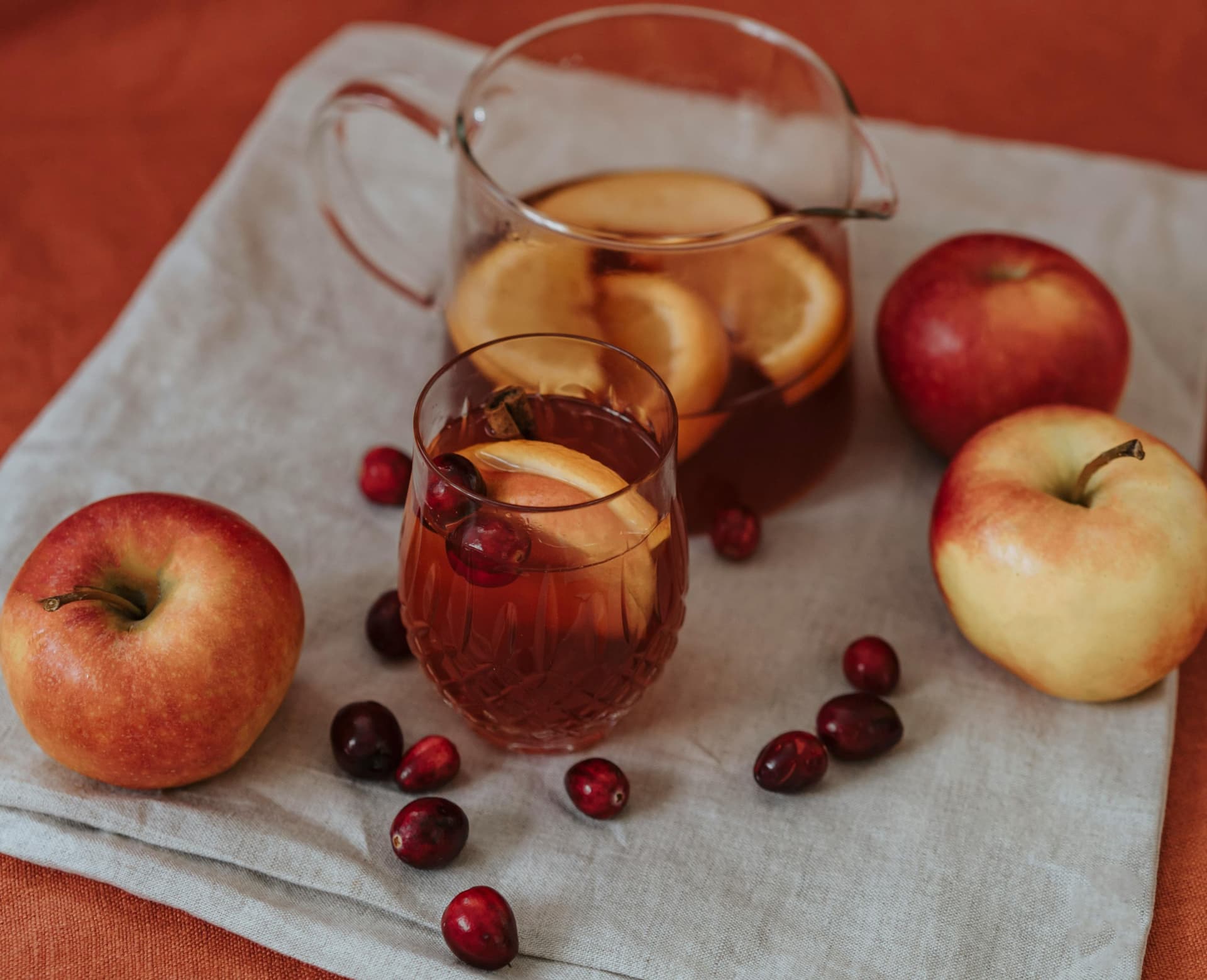
Cranberry Mule
Ingredients (serves 1)
- 2 oz 100% cranberry juice (unsweetened preferred)
- 4 oz non-alcoholic ginger beer
- ½ oz fresh lime juice (about 1 lime wedge)
- Ice cubes
Directions Mix into a festive glass filled with ice cubes. Garnish with frozen cranberries and a lime wedge.
Non-alcoholic mulled wine
Ingredients (serves 6)
- 250 mL non-alcoholic red wine
- 250 mL cranberry juice
- 250 mL orange juice
- 1 sachet of mulled wine spices
- 1 Tbsp. sugar
- 1 orange, 6 star anise, and 6 cinnamon sticks, for decoration
Directions
Put the wine, cranberry juice, and orange juice into a pan and heat until just boiling. Remove from the heat and add the spice sachet to the pan. Allow to infuse for roughly 10 minutes. Remove spice sachet, reheat to just boiling, and slowly stir in sugar. Allow to cool slightly, then pour into six heat-proof glasses and garnish each with half a slice of orange, a star anise, and a cinnamon stick.
A Season of Celebration, Not Self-Sacrifice
For women in perimenopause and menopause, alcohol isn’t off-limits—but your body is communicating that it has different needs now. Moderation is not about restriction; it’s about supporting your well-being so you can embrace the season with vibrancy, confidence, and clarity. By tuning into these changes and adjusting your habits, you’ll give yourself the gift of feeling your best during the holidays—and long after they’ve ended.