

Monika Pierce is a dynamic Health Coach and diversity advocate known for her transformative approach to wellness. With over 14 years of experience leading global initiatives in health empowerment, Monika approaches her clients with a profound sense of connection and spirituality. Monika’s own health journey has grounded her coaching techniques in compassion, honesty, and a strong desire to evoke gratitude for one’s body, even as it changes. We sat down with Monika to learn more about her own body transformation and how that shaped her guiding principles as a coach and mentor.
Monika’s Personal Journey & Transformation

You describe your 86-pound weight loss in 2010 as a transformation story rather than just about the weight itself. What did you actually gain through that journey that changed your life?
I always say the weight loss was the footnote — the real story was everything I gained. I began my journey because I was experiencing health issues, and when I went to my doctor, their response was basically, “There’s nothing wrong — you’re just obese.” There was no discussion about my habits, stress, lifestyle, or how to support genuine change. It felt dismissive and dehumanizing. I left that appointment knowing that if care wasn’t going to be offered to me, I needed to figure out how to care for myself.
As I began changing my habits, I met a different version of myself. Yes, I became physically healthier, but the real transformation was internal. I found new interests. I took up more space in my life. I spoke up more. I stopped simply “getting through the day” and started actually living it.
What I really gained was proof — proof that I could do hard things, that I could be consistent and disciplined, that I could set goals and move toward them with intention. My sense of self-efficacy became unshakeable. I felt boldly defiant — not just toward that doctor, but toward the idea that I had to shrink myself or accept less than what I deserved.
Looking back at your 15-year journey in wellness coaching, what's one moment or experience that fundamentally shifted how you understood health and wellness?
There have been so many powerful “aha” moments over the last 15 years, but one that stands out is the moment when someone I’m working with realizes that real wellness isn’t about doing what worked for someone else—it’s about learning what works for them.
I’ve watched clients try to copy what a coach, a friend, a partner, or someone on social media did. I’ve seen people cling to what worked for them 10 years ago, even though their life, body, and needs have changed since then. And every time, the breakthrough happens when they shift from “I should do this” to “What actually supports me and the life I’m living right now?”
We’ve been fed so many rules about health—some of them helpful, but many of them mentally and emotionally harmful. If you’re white-knuckling your way through any part of your wellness journey, the likelihood of maintaining it is low. One of my guiding principles is: “If you wouldn’t want to do it at 80, why are you forcing yourself to do it now?”
Create habits that you can do for the long term.
Monika’s Approach to Menopause & Midlife Wellness
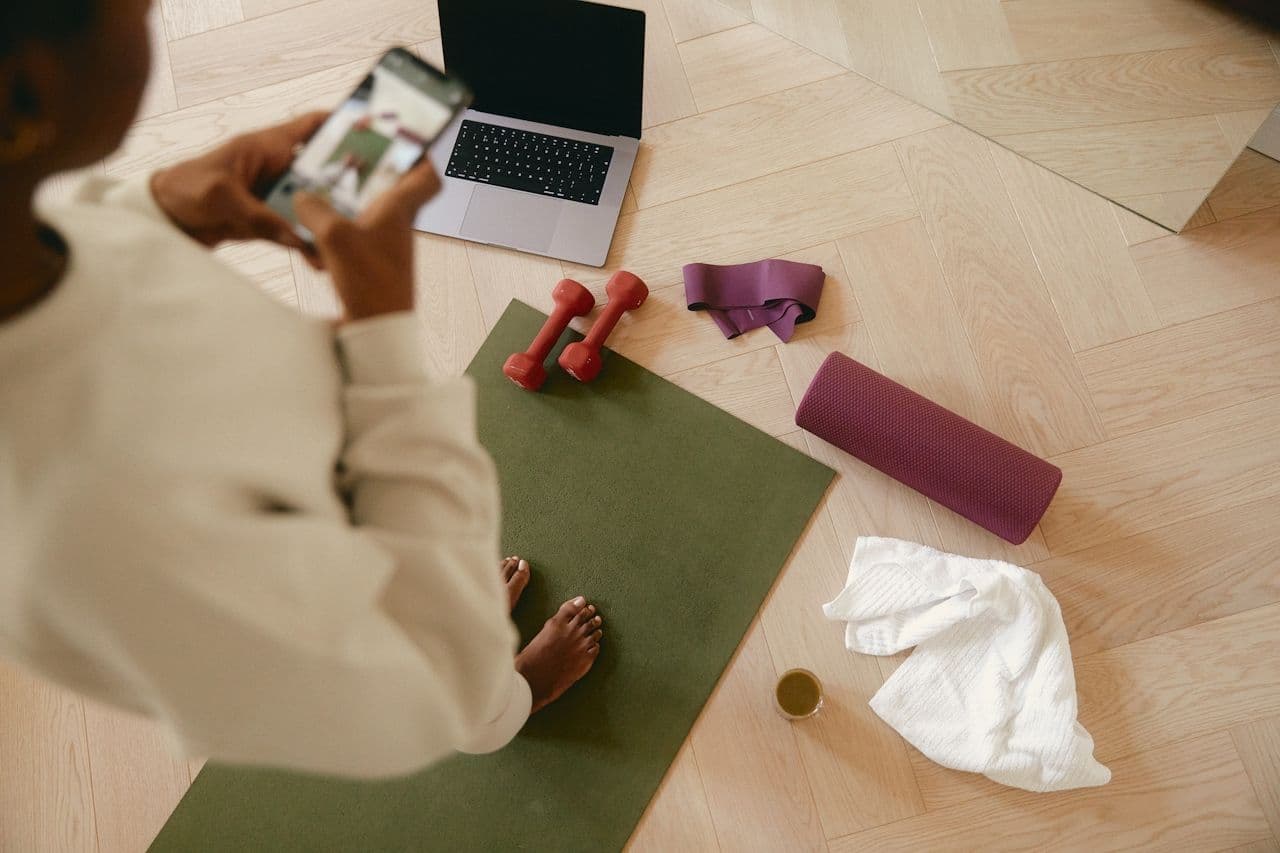
What are the most common misconceptions women have about fitness and nutrition during menopause, and how do you help them reframe their thinking?
One of the biggest misconceptions I see is that menopause means you have to give up on being fit, strong, or feeling good in your body. A lot of women think and are told by the media, “Well… I guess this is just how it is now. Time to pack it up,” and they start shrinking themselves and their lives because of what their bodies are doing. And that’s simply not true. You don’t have to abandon your health or your confidence. What’s shifting is the approach, not the possibility.
Another misconception is believing you have to work out the same way you did in your 20s and 30s to see results. Many of us grew up with that “go hard or go home” mindset. However, during menopause, your nervous system, hormones, and recovery patterns undergo changes. The goal isn’t to push harder—it’s to be strategic. Sometimes, less intensity and more consistency get you farther than grinding yourself into burnout.
I also see women thinking they need to eat less and less to control weight changes. What actually supports your body, especially now, is nourishment—stable blood sugar, protein to support muscle growth, hydration, essential minerals, and regular eating. Restriction just sends your body deeper into chaos and increases stress—something we’re already trying to manage at this stage.
I help women reframe by establishing these three perspectives:
- Your body isn’t working against you. It’s asking for a different kind of partnership.
- You don’t lose the ability to be strong—you gain the wisdom to train smarter.
- You don’t need to starve yourself—you need to support your metabolism, not punish it.
When women start working with their bodies instead of railing against them, everything shifts. Energy returns, mood stabilizes, strength increases, and confidence rebuilds. And the biggest change isn't just physical—it’s realizing that this chapter isn’t the decline people warned us about. It’s the upgrade.
The Gratitude & Wellness Connection

As we approach the Thanksgiving season, how do you envision gratitude playing a role in women's health, particularly during menopause, when the body undergoes numerous physical and emotional changes?
Gratitude is a core part of my daily life. For me, it means intentionally acknowledging what is good, even when life feels heavy or uncertain. During times of transition—especially menopause—gratitude becomes a powerful way to shift our focus. Instead of pouring all of our energy into what feels hard or unfamiliar, gratitude helps us return to what is steady, meaningful, and nourishing.
Menopause can bring a lot of self-criticism. Society sends us messages that our value is tied to youth, productivity, or appearance, and it can feel like our bodies are working against us. Gratitude interrupts that narrative. When we intentionally thank our bodies for everything they’ve carried us through—all the years, all the experiences—we’re reminding ourselves that we are still worthy, still powerful, still deeply valuable.
In your own life, how has gratitude helped you navigate challenges, both personally and professionally? Can you share a specific example?
Gratitude has been one of my greatest anchors—both personally and professionally. Not the performative kind where you pretend everything is fine, but the kind that helps you stay connected to what is true and what is good— even when life is heavy.
There was a period in my life where I felt deeply overwhelmed—balancing work, family, community, and personal transitions. I was showing up for everyone except myself. I was exhausted mentally and emotionally, and I could feel the burnout taking hold. I couldn’t see a way out, I couldn’t see the good.
I knew I had to pull myself out of what was a very dark place. One night, I challenged myself to identify something good I experienced or witnessed that day. I took out a colored Post-it and wrote down the name of a co-worker who made me laugh that day. I grabbed a different color Post-it and wrote down the lunch I enjoyed that day. I kept going. When I stopped, I folded the Post-its and placed them in a glass mason jar, positioning the jar on my desk so that I could see those colorful pieces of paper and be uplifted by all the good.
Each night after, my bedtime routine included writing down at least three things that I was grateful for. Some days, those things were big—like the fact that I received recognition for a project I completed. Other days, it was something as simple as “the smile I shared with a little girl on the train.”
Over time, gratitude helped me reframe not just what was happening, but how I was meeting it. Instead of focusing on what wasn’t going right, I began to notice the ways I was fortunate—from the people who cared for and supported me to my own capacity to rise and show up as my authentic self, even when challenged or underestimated.
Professionally, it helped me show up with more confidence, resilience, and presence. Personally, it reminded me I am not alone in my journey, even when I may feel like I am, and that I have so much good in my life.
Gratitude didn’t erase the challenges—but it softened the impact they had on my spirit. It gave me room to breathe, assess, and choose how I wanted to move forward, rather than reacting out of overwhelm.
For women going through menopause who may be struggling with their changing bodies, how can gratitude be used as a practical tool rather than just a platitude?
For women moving through menopause, gratitude has to be more than “just be thankful.” That messaging can feel dismissive when your body is changing, your sleep is off, your emotions feel unpredictable, and you don’t recognize yourself from day to day. Gratitude, in this life stage, is powerful when it is practical and relevant.
One way to do this is to pair gratitude with awareness practices. Instead of forcing yourself to love everything that’s changing, you start by acknowledging what your body is doing for you right now.
For example, when your shape shifts, you might thank your body for carrying you through decades of life, labor, joy, heartbreak, birth, caregiving, laughter, and survival. Another practical tool is gratitude journaling, which focuses specifically on the body in a grounded, realistic way.
Gratitude does not mean saying “I love everything,” but rather “I am grateful for my breath today” or “I am grateful that my legs carried me where I needed to go.”
These small acknowledgments soften the inner critic. They create space for and encourage compassion. Over time, this practice shifts the relationship and feelings of betrayal to one of compassion, understanding, and even acceptance of the change.
Gratitude becomes a way of staying connected to yourself—not ignoring what’s hard, but remembering that your body is not the enemy.
Interested in learning how a midlife wellness coach can help you? Respin Health’s Core Membership Program connects you with a one-on-one, expert menopause coach of your choice, who will create a dynamic, personalized care plan tailored to your symptoms and goals.